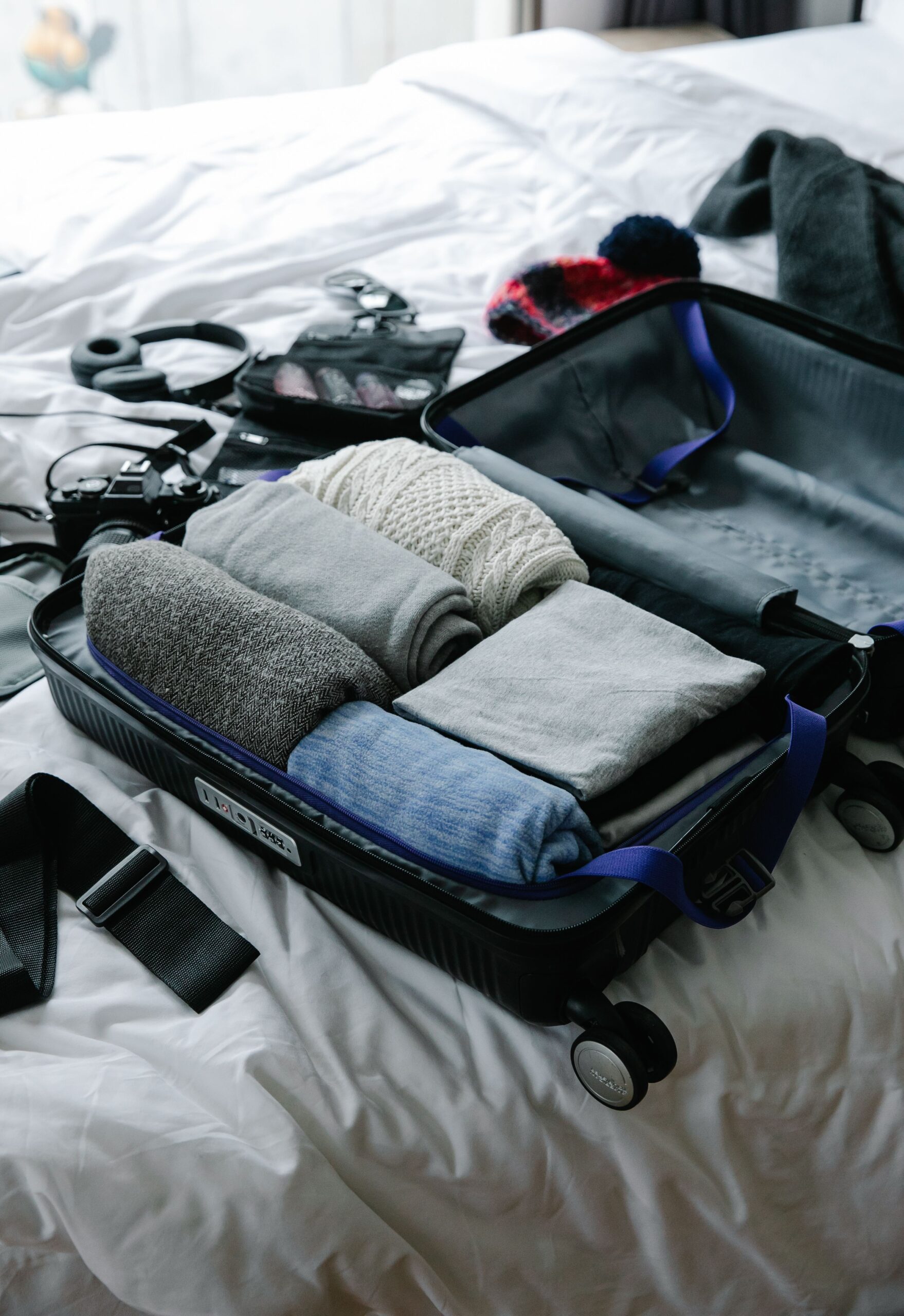
Packing Cubes vs Compression Packing Cubes: Do They Really Save Space?
Packing cubes are one of the most common pieces of specialised travel gear.
Compression packing cubes promise to go one step further: organise your clothing and reduce the amount of space it takes up.
That sounds useful for a small carry-on or personal item.
But there are two different questions:
Do packing cubes make luggage easier to organise?
and
Do compression cubes actually help you travel with a smaller bag?
Those are not necessarily the same thing.
City Trip Lab has not yet completed a controlled comparison between standard packing cubes, compression cubes and packing without cubes.
So this article explains what each method does, where the potential advantages and disadvantages are, and how we plan to test them using the same clothing and the same bag.
If you are trying to fit a short trip into a smaller bag, start with our guide to travelling Personal Item Only for a 3-Day City Trip.
What are packing cubes?
Packing cubes are lightweight fabric containers used to organise clothing and other items inside luggage.
Instead of placing individual shirts, underwear and trousers directly into a backpack or suitcase, you group them inside one or more cubes.
Their main advantage is organisation.
Clothing stays together, smaller items are easier to find and unpacking can be simpler.
A standard packing cube does not usually compress clothing very aggressively.
It mainly keeps the contents contained and organised.
What are compression packing cubes?
Compression packing cubes use an additional zip or compression system to reduce the volume of the packed cube.
You first fill the cube normally.
A second zip then pulls the sides closer together, squeezing the contents into a smaller package.
The idea is simple:
same clothes, less volume.
But that does not automatically mean better packing.
Compression can make a cube denser, heavier in one area and less flexible when fitting around other objects in a bag.
That is one of the things we want to measure rather than assume.
Packing cubes vs compression cubes
The fundamental difference is straightforward.
Standard packing cubes are primarily about organisation.
Compression cubes add an attempt to reduce volume.
Neither system reduces the actual weight of your clothing.
If you pack 4 kg of clothes, compression does not turn them into 3 kg.
It only changes how much physical space they occupy.
That distinction is especially important when an airline restricts both bag dimensions and weight.
A heavily compressed bag may fit the size limit while still exceeding the weight limit.
Do packing cubes actually save space?
Standard packing cubes may help use space more efficiently because clothing stays contained and can be arranged more predictably.
But simply putting the same clothing inside a fabric container also adds another layer of material.
So we do not want to describe ordinary packing cubes as guaranteed space-saving devices.
Their clearest benefit is organisation.
Whether they save useful bag volume depends on the cube, the bag, the clothing and how the items would otherwise have been packed.
Do compression cubes save more space?
In theory, compression cubes have a stronger claim to reducing volume because they physically squeeze the contents.
But there is an important limitation.
The saved volume only matters if it improves the overall packing result.
Imagine that a compression cube becomes very compact but also turns into a rigid rectangular block.
It may take up less volume internally while creating awkward empty spaces around it inside the backpack.
Another packing method might use those irregular spaces more efficiently.
That is why our eventual test needs to measure the entire packed bag, not just the dimensions of the cube.
Compression does not fix overpacking
This is the biggest concern we have with compression products.
If you pack too much clothing and then compress it until everything fits, you have solved a space problem without solving the packing problem.
The unused clothes still travel with you.
They still add weight.
And you still have to carry them through the airport, city and accommodation.
Our previous trips showed a repeated pattern of unused clothing and unnecessary second pairs of shoes.
That is why our 3-Day European City Break Packing List starts by reducing what goes into the bag rather than looking for ways to compress more into it.
Our preferred order is:
Pack less first. Compress second.
The advantages of standard packing cubes
Packing cubes can still be genuinely useful even if they do not significantly reduce volume.
They can separate clean and worn clothing.
They can prevent smaller items from disappearing into the bottom of a backpack.
They can make hotel unpacking faster.
And if several types of clothing are packed together, they make it easier to remove one group without disturbing the rest of the bag.
For travellers who value organisation, that may already justify using them.
The potential disadvantages of packing cubes
Packing cubes also add something that would otherwise not be in the bag.
They have their own weight.
They take up some volume.
Poorly shaped cubes may not match the internal dimensions of the luggage.
And using several small cubes can sometimes create wasted gaps between them.
For a large suitcase, those disadvantages may barely matter.
For a small personal item, every centimetre becomes more relevant.
The potential advantages of compression cubes
Compression cubes may be particularly useful for soft, bulky clothing.
Sweaters, underwear and other compressible fabrics contain a lot of air.
Removing some of that air can make the packed bundle noticeably smaller.
They can also keep the compressed contents contained, which may make it easier to close a small backpack or cabin bag.
For winter city trips, this could be more useful than during warm-weather travel with thin clothing.
That is a hypothesis we want to test rather than a conclusion we have already reached.
The potential disadvantages of compression cubes
Compression can encourage exactly the behaviour City Trip Lab is trying to reduce:
“There is more space, so I can pack something else.”
They also add hardware and fabric, which means additional weight.
Overfilling a cube can put more stress on zips and seams.
And highly compressed clothing can become more wrinkled, depending on the fabric and packing method.
Again, the real question is not whether compression works mechanically.
It is whether the complete travel experience becomes better.
Rolling, folding or using cubes?
Rolling and folding are often presented as competing techniques.
We think that comparison is too simplistic.
Different clothing behaves differently.
A T-shirt may roll neatly.
A structured shirt may be easier to fold.
Underwear may fit almost anywhere.
The most useful method may eventually be a combination rather than one universal technique.
That is why we plan to compare systems using the same set of clothing rather than changing both the clothing and packing method at the same time.
How City Trip Lab plans to test packing cubes
Maak “Packing Lab” in de volgende zin een interne link naar de Packing Lab-pagina.
This comparison will become one of our structured Packing Lab tests.
We want to use the same clothing, the same bag and as many identical conditions as possible.
The comparison will include:
- No packing cubes
- Standard packing cubes
- Compression packing cubes
For each method, we want to record the packed dimensions or usable bag space, total packed weight, ease of packing, ease of accessing clothing and how practical the system feels during an actual trip.
We also want to photograph each setup so the difference is visible rather than described only in numbers.
What we want to measure
The most interesting measurement is not simply:
Which method makes the smallest pile of clothes?
We want to know whether the complete bag becomes more practical.
That means looking at how easily the bag closes, how much free space remains, whether items can still be accessed and whether the compressed shape fits the luggage efficiently.
Weight matters too.
If a compression system saves a small amount of volume but adds significant weight, that trade-off should be visible.
A fair test needs the same clothing
A common problem with packing demonstrations is that the before and after examples are not truly comparable.
One method may contain different clothes, a different number of items or a differently packed bag.
Our test should avoid that.
The clothing stays the same.
The bag stays the same.
Only the packing method changes.
That will not turn the result into laboratory science, but it should make the comparison considerably more useful.
Which one should you buy?
At this stage, City Trip Lab does not have a tested winner.
If your main problem is organisation, normal packing cubes may already be enough.
If bulky clothing is consuming too much volume, compression cubes may offer an advantage.
And if you already pack a small amount efficiently without cubes, buying another travel product may not improve anything at all.
That reflects the approach behind our Packing Gear guides: specialised travel gear should solve a real problem before it earns a place in the bag.
Do you need packing cubes at all?
Possibly not.
A backpack worked before packing cubes existed.
Clothing can be folded or rolled directly into luggage.
Plastic or lightweight reusable bags can separate certain items when necessary.
There is no requirement to buy a packing system simply because you want to travel carry-on only.
For some travellers, the biggest improvement may come from owning fewer travel accessories rather than more.
If our eventual test shows that the difference is small, we will publish that result too.
Our current verdict
Standard packing cubes have an obvious organisational purpose.
Compression packing cubes add a plausible space-saving benefit.
What we do not yet know is whether that difference is large enough to matter during a real three-day city trip.
So our current verdict is deliberately incomplete:
Packing cubes organise. Compression cubes compress. Whether either one actually improves your trip still needs to be tested.
That test is coming.
FAQ
Are compression packing cubes better than normal packing cubes?
Not automatically. Compression cubes may reduce clothing volume, while standard cubes may be simpler and lighter. The better option depends on whether your main problem is space, organisation or neither.
Do compression packing cubes reduce luggage weight?
No. Compressing clothing changes its volume, not its weight. The compression cube itself also adds some weight.
Are packing cubes worth it for a three-day trip?
They can make a small bag easier to organise, but a short trip may also be simple enough to pack without them. We plan to test both approaches using the same clothing and bag.
Can packing cubes help with personal-item travel?
Potentially. Better organisation or compression may make a small bag easier to pack, but reducing unnecessary clothing first is likely to have a larger effect.
Do compression cubes wrinkle clothes?
Compression can increase pressure on clothing, so some fabrics may wrinkle more than others. The effect depends on the material, how tightly it is compressed and how long it remains packed.