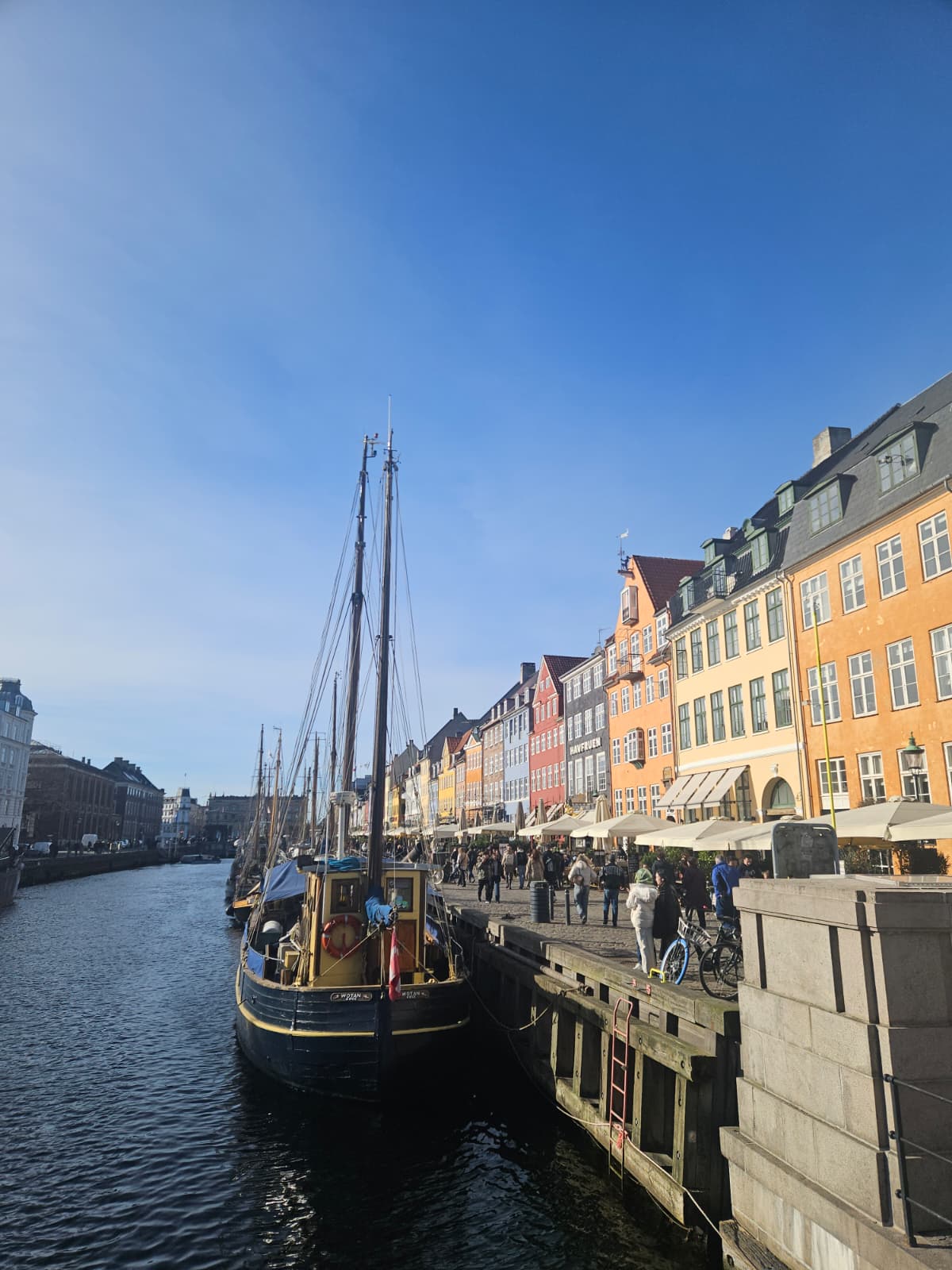
3-Day European City Break Packing List: Carry-On Only
A three-day European city break should not require a large suitcase. For most short trips, one personal item or cabin bag is enough if you pack for your actual plans and the expected weather instead of every possible scenario.
A practical starting point is 2–3 tops, one extra pair of trousers, underwear and socks for each day, sleepwear, one versatile extra layer, comfortable walking shoes, travel-size toiletries and only the electronics you expect to use.
The aim of this packing list is simple: take everything you need for three days without carrying things around Europe that never leave your bag.
Quick 3-Day City Break Packing List
Wear while travelling
- Comfortable trousers or jeans T-shirt,
- shirt or other versatile top Sweater,
- cardigan or other layer Jacket suitable for the expected weather
- Comfortable walking shoes
- Your heaviest or bulkiest clothing items
Pack in your bag
Clothing
- 2 additional tops
- 1 additional pair of trousers
- jeans or other bottom
- 3 sets of underwear
- 3 pairs of socks
- Sleepwear
- Optional smarter outfit or item if your plans require it
Toiletries
- Toothbrush
- Toothpaste
- Deodorant
- Essential skincare
- Medication
- Small quantities of any other products you actually use
Electronics
- Phone
- Charger
- Earbuds or headphones
- Power bank if needed
- Travel adapter if required for your destination
Essentials
- ID or passport
- Payment cards
- Travel documents
- where required Prescription medication
- Sunglasses, umbrella or other weather-specific items
The exact list should change with the destination, season and activities. Three days in Copenhagen in spring require a very different approach from three days in Paris during summer.
Personal Item or Carry-On?
Before deciding what to pack, decide how much luggage you actually want to take.
For many three-day trips, a small backpack or personal-item-sized bag may be enough. A larger cabin bag gives you more flexibility but can also encourage overpacking and may cost extra depending on the airline and ticket.
Ask yourself three questions:
- Can I comfortably wear my bulkiest clothes while travelling?
- Do I genuinely need a second pair of shoes?
- Am I taking anything purely “just in case”?
If the answer to the last question keeps being yes, your luggage will fill surprisingly quickly.
Always check the current baggage dimensions and weight allowance directly with your airline before travelling. Airline policies change, and the rules for a personal item and cabin bag are not the same across European airlines.
Travelling with very limited luggage? See our Carry-On Travel guides for personal-item and cabin-bag strategies.
What Clothes Do You Actually Need for 3 Days?
The simplest method is to build a small wardrobe in which most items work together.
Instead of packing three completely separate outfits, start with what you will wear while travelling and add enough pieces to create different combinations.
Wear on travel day
- 1 pair of trousers
- 1 top
- 1 sweater or other layer
- 1 weather-appropriate jacket
- 1 pair of comfortable walking shoes
Pack
- 2 additional tops
- 1 alternative pair of trousers or other bottom
- underwear and socks
- sleepwear
That already gives you several combinations without packing an entirely separate outfit for every day.
If you expect a restaurant, event or other occasion that requires different clothing, add one versatile item rather than an entirely separate outfit.
A useful rule
Pack for the things that are actually in your itinerary, not for things that might theoretically happen.
A three-day city break consisting of museums, restaurants and walking around the city requires very different luggage from a trip involving hiking, nightlife and a formal dinner.
Do You Really Need Two Pairs of Shoes?
Shoes are one of the fastest ways to lose valuable luggage space. For a normal three-day city break, one comfortable and versatile pair may be enough.
Our own travel history gave us a surprisingly clear reason to question the habit of packing a second pair.
What happened on our first four reconstructed trips?
| Trip | Second pair packed | second pair needed |
| Paris | yes | no |
| Prague | yes | no |
| Copenhagen | yes | no |
| Durbuy | yes | no |
Across these four short European trips, we packed a second pair of shoes every time and did not need it once.
Even in Durbuy, where walking was a major part of the trip, everyday shoes remained the preferred choice over dedicated walking shoes.
This is a small personal dataset — 4 trips, not a universal rule. But it is strong enough for us to change how we pack future city trips.
When does a second pair still make sense?
- A formal event requires different footwear
- Heavy rain or snow makes one pair impractical Your itinerary includes hiking or another specialist activity
- Your everyday shoes are unsuitable for part of the trip
- You know from experience that changing shoes significantly improves comfort
If none of those applies, ask whether carrying another bulky pair for only three days is really worth the space.
Our next city-trip test will deliberately start with one pair of versatile everyday shoes and record whether we actually miss having a second pair.
Pack Toiletries Without Wasting Half Your Bag
Toiletries are one of the easiest places to reduce both weight and volume on a short city trip.
Our own packing changed noticeably after one particularly inefficient trip.
What changed after Paris?
On a three-day trip to Paris, we packed full-size bottles of shampoo, shower gel and other toiletries for only two nights. Most of the product stayed unused, while the bottles still took up the full amount of space in our luggage.
On later trips, we changed our approach.
- We first bought smaller versions of the products we normally use.
- We then switched to refillable travel containers filled with our own shampoo, shower gel, hair products and other essentials.
- We packed only the amount we realistically expected to need for the trip.
The refillable-container approach worked best for us because it combined familiar products with much less unnecessary volume.
A simple 3-day toiletry approach
- Toothbrush
- Small toothpaste
- Deodorant
- Medication
- Essential skincare
- Contact lens supplies if required
- Small amounts of shampoo, shower gel or hair products when your accommodation does not provide suitable alternatives
- Only the grooming products you actually use
Before packing toiletries, check what your accommodation already provides. Shampoo, shower gel, soap and hairdryers are common in hotels, but availability varies and should be checked rather than assumed.
If you are flying with liquids in hand luggage, always check the current security rules for both your departure and return airports.
What we want to test next
On a future trip, we plan to compare the weight and volume of full-size toiletries, commercial travel-size products and refillable containers filled with only a three-day quantity.
That should answer a more useful question than simply asking whether travel bottles are convenient: how much luggage space and weight do they actually save on a short city trip?
Tech You Actually Need
Technology is another category where “just in case” items can quietly add unnecessary weight.
On our short city trips, the smartphone consistently did most of the work: navigation, tickets, payments, photos, restaurant searches and communication.
A simple setup is usually enough:
- Smartphone
- Charger
- Earbuds or headphones
- Power bank if needed
- Travel adapter if required
A laptop, tablet, camera, multiple chargers and several power banks can all be useful individually, but for a three-day city trip the better question is whether you will realistically use them.
On previous trips we sometimes brought extra electronics simply because there was space available. In practice, the phone and a power bank were usually the most useful items.
Small things can matter more than extra gear
Interestingly, we were more likely to miss small practical items such as headphones or snacks than larger “backup” items such as extra clothing or a second pair of shoes.
Travelling light therefore does not mean taking the fewest possible items. It means removing things that add little value while keeping the small items you genuinely use.
Pack for the Weather, Not Just the Season
“Europe in March” or “Europe in November” is not a useful packing strategy on its own.
Weather varies significantly between European cities, and the same destination can feel very different depending on rain, wind, sunshine and how active you are during the day.
What our previous trips showed
On three of our first four reconstructed trips, we packed clothing or outer layers that turned out to be warmer than necessary.
- In Paris, a heavier autumn jacket was uncomfortable at around 22°C, while a simple poncho bought locally worked better in the rain.
- In Prague, a sweater turned out to be warmer than needed.
- In Copenhagen, a thin winter jacket was often removed during active walking and sunshine.
- In Durbuy, colder and wetter conditions made warmer clothing much more appropriate.
The lesson is not to avoid warm clothing. It is to match the clothing to the actual forecast and planned activity rather than packing for the coldest imaginable scenario.
What to check a few days before departure
- Daytime temperature
- Overnight temperature
- Rain probability and expected rainfall
- Wind
- Sunshine
- How much time you expect to spend outdoors
- How active you will be while walking around the city
Layers are usually more flexible than several bulky alternatives. They allow you to adjust throughout the day without carrying an entirely different outfit for every weather possibility.
Our future city-trip tests will record both the expected weather before departure and the actual conditions during the trip so we can compare what we packed with what we really needed.
What Not to Pack for a 3-Day City Break
Reducing luggage is often easier when you decide what should stay at home.
Looking back at our previous short European trips, the same kinds of unnecessary items kept appearing: extra shoes, too many clothing options, oversized toiletries and items packed “just in case”.
The items we repeatedly overpacked
- A second pair of shoes without a specific purpose
- More trousers and tops than the trip realistically required
- Heavy layers based on the season rather than the actual forecast
- Full-size toiletries for only two or three nights
- Electronics we were unlikely to use
- Backup items simply because there was spare luggage space
- Clothing for weather we hoped to get rather than weather we were likely to get
- Household items already available at the accommodation
The common pattern was not that we packed completely useless things. Most items had a theoretical purpose. The problem was that many of those situations never actually happened.
“Just in case” adds up quickly
One extra item rarely feels significant. A second pair of shoes, one extra sweater and a few full-size toiletries each seem reasonable on their own.
Together, however, those decisions can turn a compact three-day trip into a suitcase full of items that spend the entire weekend inside the accommodation.
Our current rule is simple:
If an item does not solve a likely problem or support a specific part of the itinerary, it needs a very good reason to go in the bag.
Pack less, but not blindly
Travelling light is not about removing useful items for the sake of having the smallest possible bag.
Previous trips showed that small practical items such as headphones, snacks, rain protection or a power bank could be more useful than extra clothing or footwear.
The objective is therefore not minimalism for its own sake. It is to remove low-value items while keeping the things that genuinely make the trip easier
Packing Cubes, Compression Cubes or No Cubes?
Packing organisers can make a small bag easier to manage, but organisation and actual space saving are not necessarily the same thing.
Standard packing cubes mainly help separate and organise clothing. Compression cubes are designed to reduce the volume those clothes occupy.
The obvious question is whether that compression creates enough useful space to justify the extra product, weight and effort.
Why we are not giving a verdict yet
Many packing guides recommend compression cubes, while others argue that careful folding or rolling works just as well. Rather than repeat either claim, we want to test the methods under the same conditions.
Our comparison will use the same clothing, the same bag and the same basic packing conditions.
What we plan to compare
- Clothing packed without cubes
- Clothing packed in standard packing cubes
- Clothing packed in compression packing cubes
- Space occupied inside the same bag
- Total packed weight
- Ease of packing and unpacking
- How practical each method is during an actual short trip
This matters because a packing method can save space while still being inconvenient in daily use.
For example, a tightly compressed cube may create more room in the bag, but that advantage matters less if repacking it every morning becomes frustrating.
The question we actually want to answer
Do compression packing cubes save enough usable space on a three-day city trip to be worth using?
Once the comparison has been completed, the results will be added to our Packing Lab and linked from this guide.
Until then, packing cubes should be treated as an organisation tool first and a proven space-saving tool second.
How to Fit Everything Into One Bag
Packing light becomes much easier when you start with the things you cannot change: your destination, the expected weather, your planned activities and your airline’s baggage allowance.
Everything else can be questioned.
A simple packing order
- Put aside what you will wear while travelling.
- Choose the minimum clothing combinations required for the trip.
- Remove duplicate “just in case” items.
- Reduce toiletries to realistic three-day quantities.
- Take only the electronics you expect to use.
- Pack the bag once.
- Weigh it.
- Remove anything that still does not have a clear purpose.
If the bag is already completely full before departure, remember that you may want some spare room for food, small purchases or souvenirs during the trip.
Start with the bag, not with the pile of stuff
One reason overpacking happens is that luggage expands to match what is available. When we travelled by car or had a suitcase with plenty of empty space, it was easy to add another sweater, another pair of shoes or full-size toiletries simply because they fitted.
A smaller bag reverses that process. Instead of asking “what else can I take?”, you start asking “what do I actually need?”
That does not mean forcing everything into the smallest possible backpack. The goal is to choose a bag that fits the trip without creating unnecessary spare capacity that immediately gets filled.
Our Real City-Trip Packing Tests
We did not start travelling light because we had perfected packing. Quite the opposite.
We reconstructed four previous short European trips — three city trips to Paris, Prague and Copenhagen, plus a family trip to Durbuy — to identify which things we repeatedly carried but did not actually use.
The trips lasted between three and four days and included travel by car and plane, hotels and holiday rentals, temperatures from around 12°C to 22°C, and both dry and rainy conditions.
What we learned from our first four trips
| Packing behaviour | Result |
| Packed a second pair of shoes | 4 out of 4 trips |
| Actually needed the second pair | 0 out of 4 trips |
| Packed clothing that went unused | 4 out of 4 trips |
| Packed clothing or layers that were too warm | 3 out of 4 trips |
| Used normal everyday shoes instead of dedicated walking shoes | 4 out of 4 trips |
| Used smaller toiletry containers after our first trip | 3 out of 4 trips |
| Carried items that turned out to be unnecessary | 4 out of 4 trips |
This is a small personal dataset, not a claim about how everybody should travel. But it gives us something more useful than a purely theoretical packing list: a baseline against which we can test future trips.
Our next test
Our next European city trip will be used as our first planned packing experiment rather than another retrospective reconstruction.
Before travelling, we will record:
- everything packed
- total number of items
- bag type and dimensions
- empty bag weight
- total packed weight
- expected weather
- planned activities
After returning, we will record:
- which items were actually used
- which items remained unused
- anything we missed
- anything we had to buy
- whether one pair of shoes was enough
- whether the bag size was sufficient
- what we would change next time
Our aim is not to prove that everyone should pack the same way. It is to gradually replace generic packing advice with actual results from repeated European city trips.
The Final 3-Day Packing Checklist
Before closing your bag, run through this final checklist.
Clothing
- 2–3 tops in total
- 2 trousers or other bottoms in total
- 3 sets of underwear
- 3 pairs of socks
- Sleepwear
- One versatile warm layer
- Weather-appropriate jacket
- Comfortable walking shoes
- Optional second footwear only when there is a clear reason
Toiletries
- Toothbrush
- Toothpaste
- Deodorant
- Medication
- Essential skincare or grooming products
- Liquids packed according to current travel rules
- Only the quantities you realistically need for three days
Electronics
- Phone
- Charger
- Earbuds or headphones
- Power bank if needed
- Adapter if required
Travel essentials
- Passport or ID
- Payment method
- Tickets or reservations accessible offline where useful
- Accommodation details
- Weather-specific essentials
Before adding anything else, ask one final question:
What exactly am I going to use this for during these three days?
If you cannot give a clear answer, it probably does not need to come.
Frequently Asked Questions
Is a carry-on enough for a 3-day European city break?
For most three-day city trips, yes. Depending on the season and what you need to take, it may even be possible to travel with only a personal-item-sized backpack. Bulky winter clothing, specialist equipment or formal events can increase the amount of luggage required.
How many outfits do I need for three days?
You usually do not need three completely separate outfits. A small selection of interchangeable tops, trousers and layers can create enough combinations while taking considerably less space.
Do I need two pairs of shoes for a weekend trip?
Usually not. In our first four reconstructed short European trips, we packed a second pair every time and did not need it once. That does not make one pair universally correct, but it is enough for us to test future trips with one versatile everyday pair.
What size bag do I need for three days?
There is no single correct capacity. A compact personal-item backpack may be sufficient for a minimalist trip, while a larger cabin bag provides more flexibility for winter clothing or additional equipment. The better question is how much of what you normally pack is actually used.
Are packing cubes worth using for a short trip?
Packing cubes can make luggage easier to organise. Whether compression cubes genuinely save enough usable space to justify using them is something we are testing separately under the same packing conditions.
One Comment
Comments are closed.